Grinding or removal
Stump Grinding or Stump Removal: Choosing for a Cape Coral Yard
Grinding takes the stump below grade and lets the deep roots rot away; removal digs the whole root ball out. Most yards only need the first, and the call settles which one yours needs.
Not sure which?
Tell us what is going in where the stump stands, and we quote the whole job before we start.
(239) 423-0196Monday to Friday, 7 am to 7 pm; Saturday and Sunday, 8 am to 4 pm. Calls outside those hours go to voicemail and we return them the next working morning.
- Free, no-obligation estimates
- No surprise charges after the quote
The two methods
Grinding versus removal
Grinding shaves the stump down "below grade", under the soil line, and leaves the deeper roots in the soil to decay, while removal digs out the whole root ball. One takes the part you see; the other takes everything under it too.
Right for most yards
Stump grinding
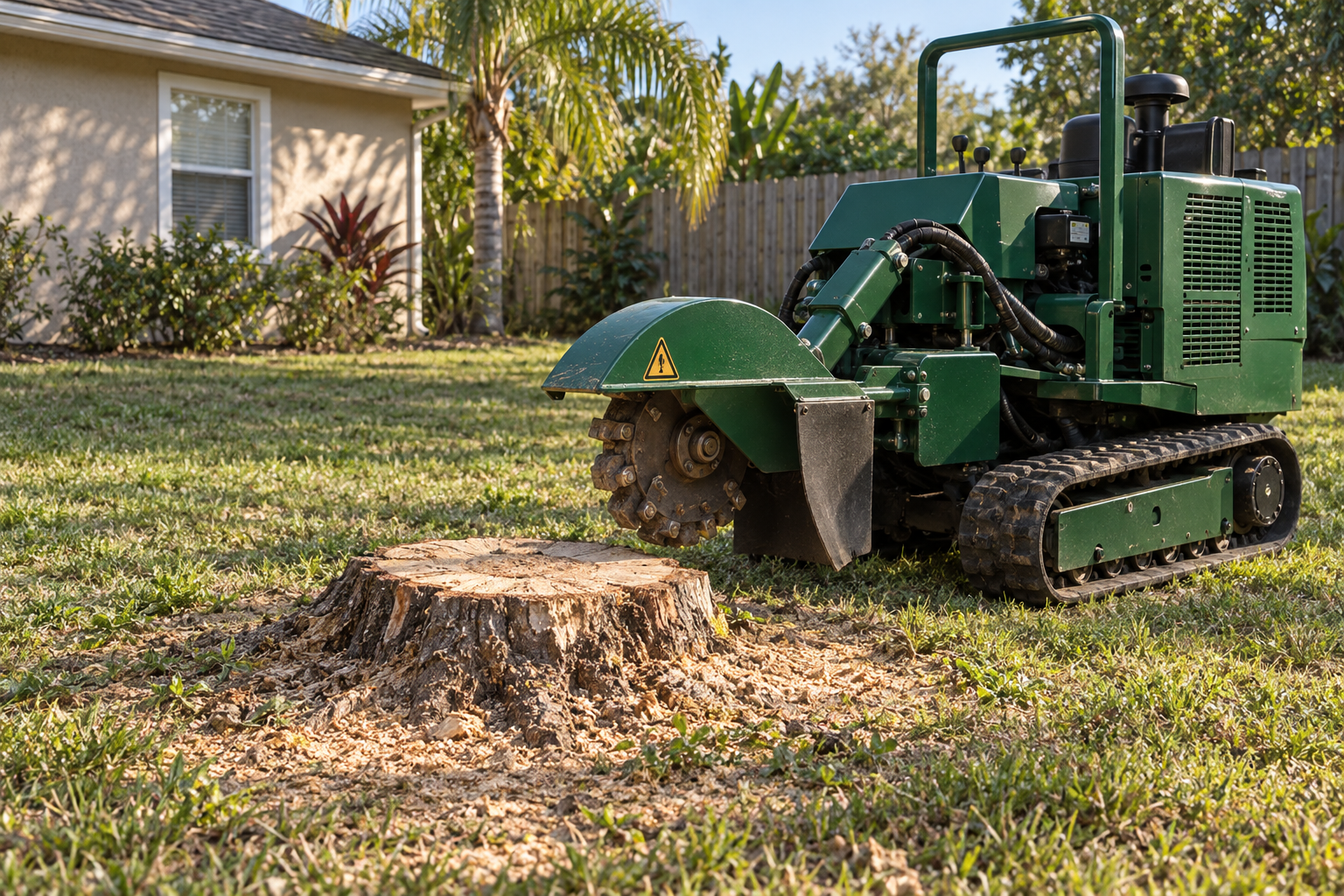
The grinder's cutting wheel shaves the stump and the major surface roots around it into chips, down below the lawn.
- Stump and surface roots ground out within 3 to 5 feet of the trunk
- Cut 8 to 12 inches below grade
- Deeper, finer roots left to decay over 3 to 5 years
- Costs less and leaves the yard far less disturbed
Full stump removal
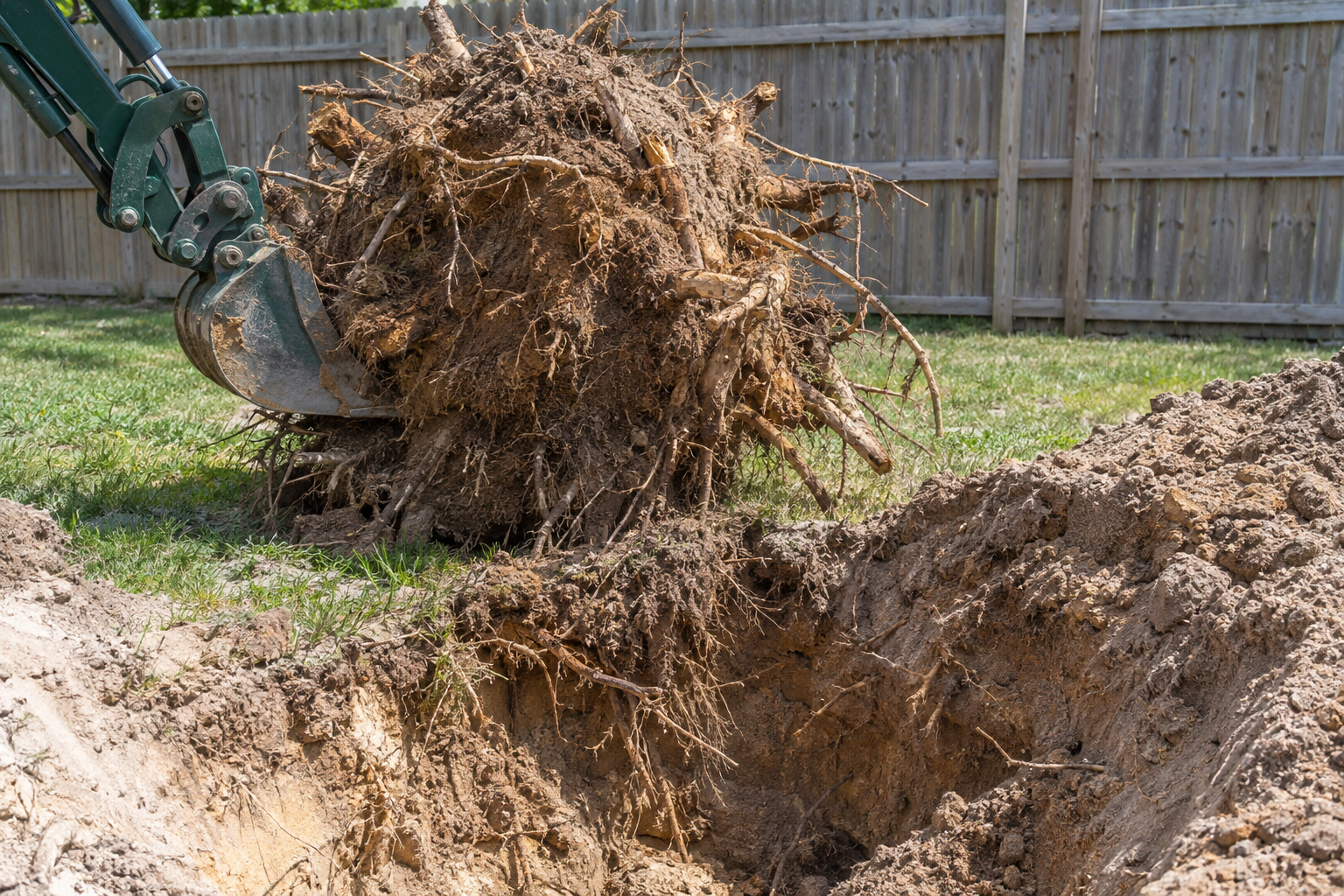
The stump is dug out with its "root ball", the whole mass of roots under it, which can reach 4 to 10 feet across and 3 to 6 feet deep.
- The root system lifted out of the ground, not left to decay
- Heavier digging equipment working the lawn
- Costs more and leaves an open hole to fill
- Clears the spot for a new tree or a foundation
Most stumps
When grinding is enough
Grinding can do the whole job when the spot is going back to lawn, beds or mulch, and that covers most stumps in a home yard.
Grinding is recommended in roughly 90 to 95 percent of residential cases, because it is faster, cheaper and far less disruptive than pulling the roots out. It is the quicker, cheaper route for re-sodding, and the same holds when the plan is:
- Sod or seed laid straight over the ground-out spot
- A flower bed or shrubs planted around where the stump stood
- A mulch ring or a path across the old stump
How our stump grinding runs, from the quote to the grinding to the cleanup:
Stump Grinding in Cape Coral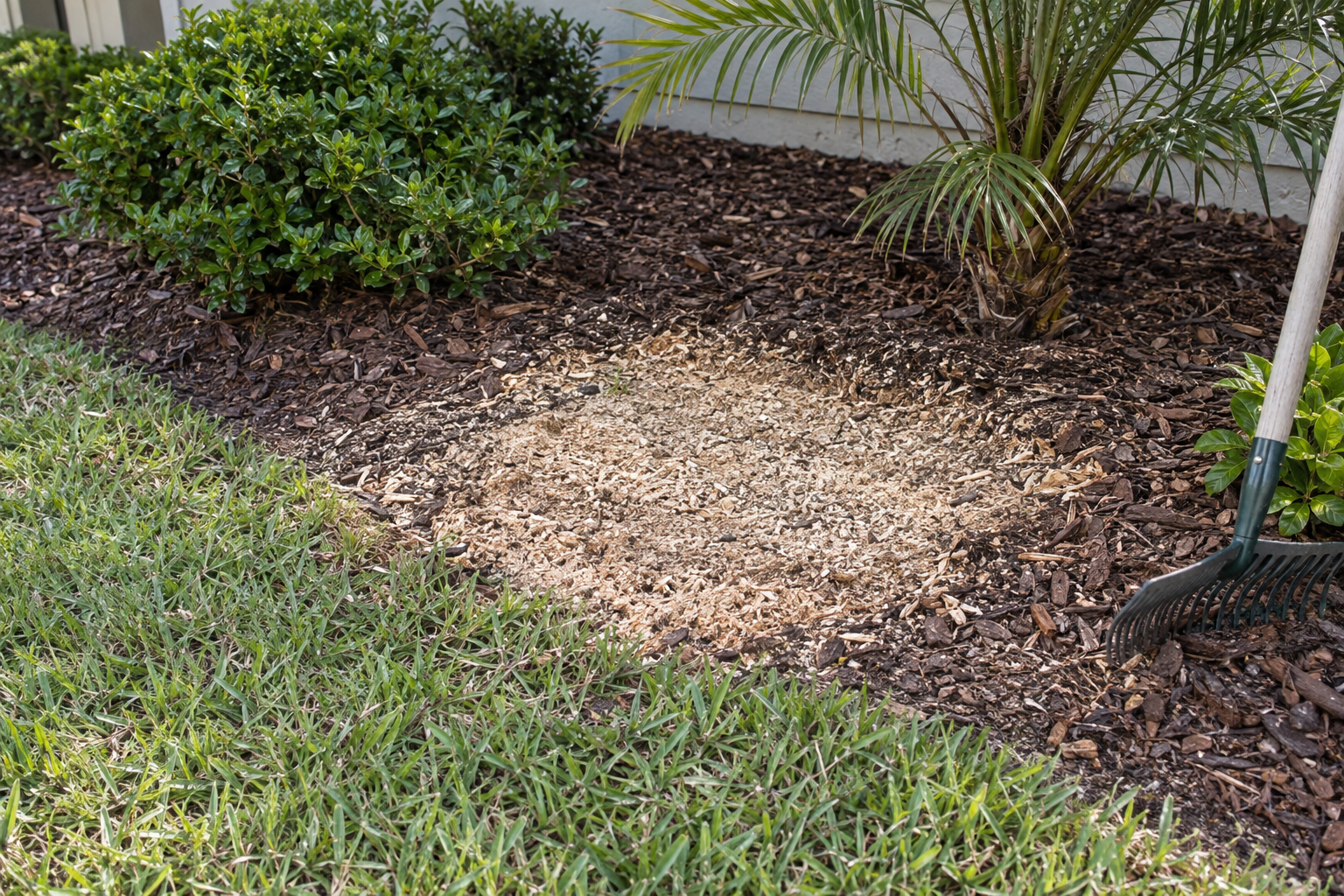
The exceptions
When the root ball must come out
Full removal is needed when a new tree goes in the same spot, when the ground is dug for building, or when the roots press on pipes.
"Full stump removal" means excavating the stump and its root system rather than grinding it. These are the cases that call for it:
- Replanting. A new tree is going in where the old one stood, and its roots need the ground the old root ball fills.
- Construction. The ground is being dug for an addition, a slab or a pool, and the roots are in the way of the digging.
- Foundations. A footing or a slab edge is going over the spot, and nothing should be left to rot underneath it.
- Pipes. The roots are pressing on a water or sewer line, and they have to come away from it.
When the root ball has to go, that is our stump removal:
Stump Removal in Cape CoralSide by side
Cost and yard damage compared
Grinding costs less and disturbs the yard less, while digging a stump out costs more and leaves a larger hole to restore. Digging causes far more damage to the property than grinding does.
Here is how the two methods compare on a typical yard:
| Compared | Stump grinding | Full stump removal |
|---|---|---|
| Cost | The lower price of the two | Typically 2 to 4 times the price of grinding, for heavier equipment, more labor and more cleanup |
| What comes out | The stump and surface roots, below grade | The stump and the whole root ball |
| Damage to the yard | Little beyond the stump spot itself | A wide dig through the lawn around the stump |
| The hole left | A shallow spot filled with chips and soil | A deep hole as wide as the root ball |
| Restoring the spot | Rake level, then seed or sod | Backfill with topsoil, grade, then seed or sod |
Not sure which your spot needs?
Call and tell us what is going in where the stump stands. We look at it and quote the whole job before we start, with no surprise charges after.
Afterward
What each method leaves behind
Grinding leaves a pile of wood chips and the deep roots in the ground, and removal leaves an open hole that has to be backfilled.
Either way, nothing goes into the ground until the buried gas, electric and water lines are marked through 811 Before You Dig.
After grinding
A mound of wood chips where the stump was. We rake it back into the spot as "chip-and-soil backfill" and level it, or haul the pile away as a separate line on the quote. The deeper roots stay in the soil and break down there.
After removal
An open hole as wide as the root ball, and a pile of dug soil beside it. The hole needs topsoil to fill and level it before seed or sod goes down.
Do the leftover roots cause problems?
The roots left after grinding may stay in the soil for a while, but they rarely cause trouble, because they decay there over 3 to 5 years. Grinding below the "root collar", the tree's growth center, is what stops a stump sprouting; a few aggressive species can still send up "suckers" from a lateral root and need follow-up.
How the roots decay, and the few that regrow:
Stump Roots After GrindingFrom Google
A neighbor on the stump we cleared
Very quick service. Came next day in the morning with all tools needed. Very self sufficient and cleared up our stump in no time. Pricing was great and better than competitor. Give him a call if you need stumps removed !!
Your free estimate
Grind it or dig it out? Call and we will tell you.
Tell us how many stumps, roughly how wide, and what the spot is for next. We quote the whole job before we start, grinding or removal.
Get a Free Estimate (239) 423-0196- We answer the phone or call back the same working day
- We clean up when the work is done
Monday to Friday, 7 am to 7 pm; Saturday and Sunday, 8 am to 4 pm.