Roots after grinding
What Happens to the Roots After Stump Grinding in Cape Coral
Grinding takes the stump and the surface roots around it. The deeper roots stay in the ground and break down on their own, and only a new tree or a slab on the spot needs them gone.
Get a Free Estimate
Tell us about the stump and the roots around it, and we quote the whole job before we start.
(239) 423-0196We answer every day of the week. Calls outside our hours go to voicemail and we return them the next working morning.
- Free, no-obligation estimates
- We clean up when the work is done
After the grinder leaves
Roots left in the soil after grinding
Grinding removes the stump and the major surface roots near it, and the deeper roots stay in the soil to decay on their own.
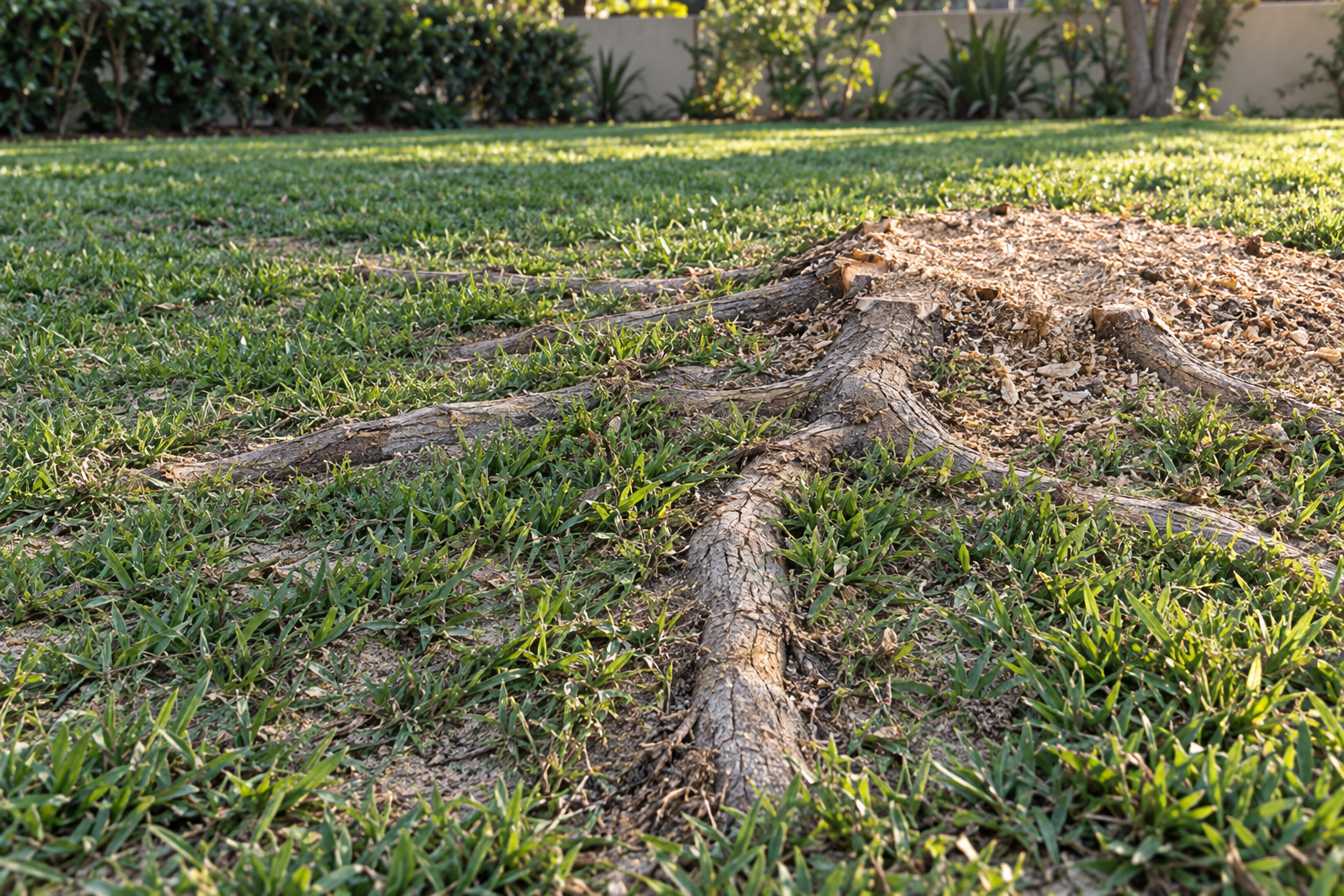
The grinder takes the visible stump, the "root flare" where the trunk widens into roots, and the big roots running along the top of the ground. A thorough job follows those surface roots several feet out from the stump instead of stopping at the trunk. What sits deeper is left where it is: nothing has to be dug out for a lawn to go back over the spot.
Ground out on the visit
- The stump itself, ground below grade
- The root flare and root collar at its base
- The major surface roots, followed several feet out
Left in the soil
- The deeper roots under the stump
- The lateral roots past the grinding area
- Both break down naturally, with no digging
How long the roots take to decay
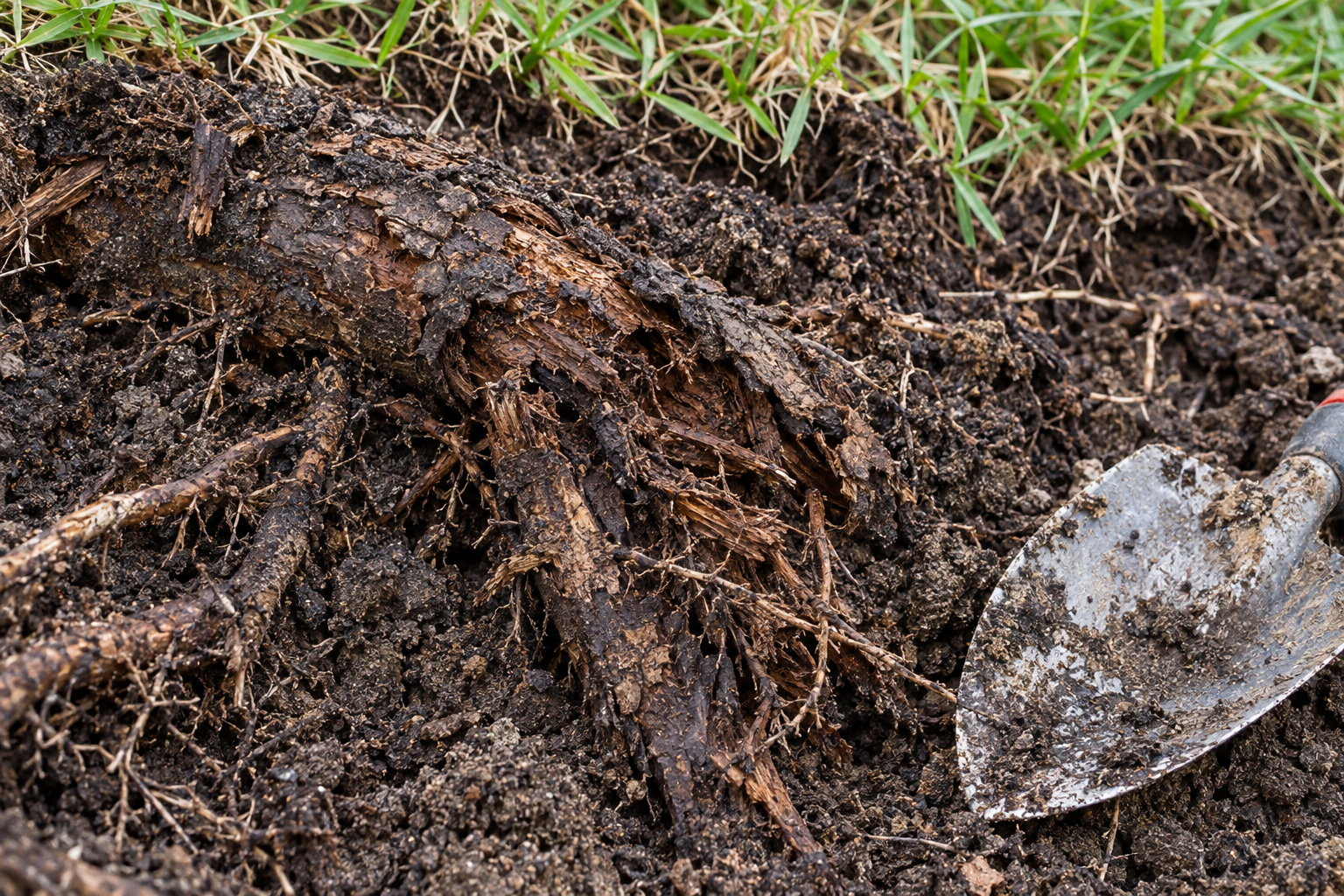
The roots left after grinding can typically take three to seven years to decay.
3–7 years
for the roots left in the ground to rot away
Over that time the old wood darkens, softens and crumbles into the soil, while the grass grows back over the spot above it. You do not need to do anything to the roots for that to happen; they decompose naturally once the stump and its surface roots are gone.
Sprouts from the remaining roots
A stump ground below the root collar rarely sprouts again, but some species can push up shoots from the roots left in the soil until those roots die off.
The "root collar" is the tree's growth center, at the base of the stump. A stump left standing keeps encouraging new shoots, so the grinding has to take that collar out below grade. The few "suckers" that come up afterward rise from lateral roots outside the grinding area, and they stop once those roots have died.
- Root collar ground out below grade
- Most regrowth stops with the collar gone
- Root suckers fade as the old roots die
How far below grade the grinder goes to stop the sprouts:
Stump Grinding Depth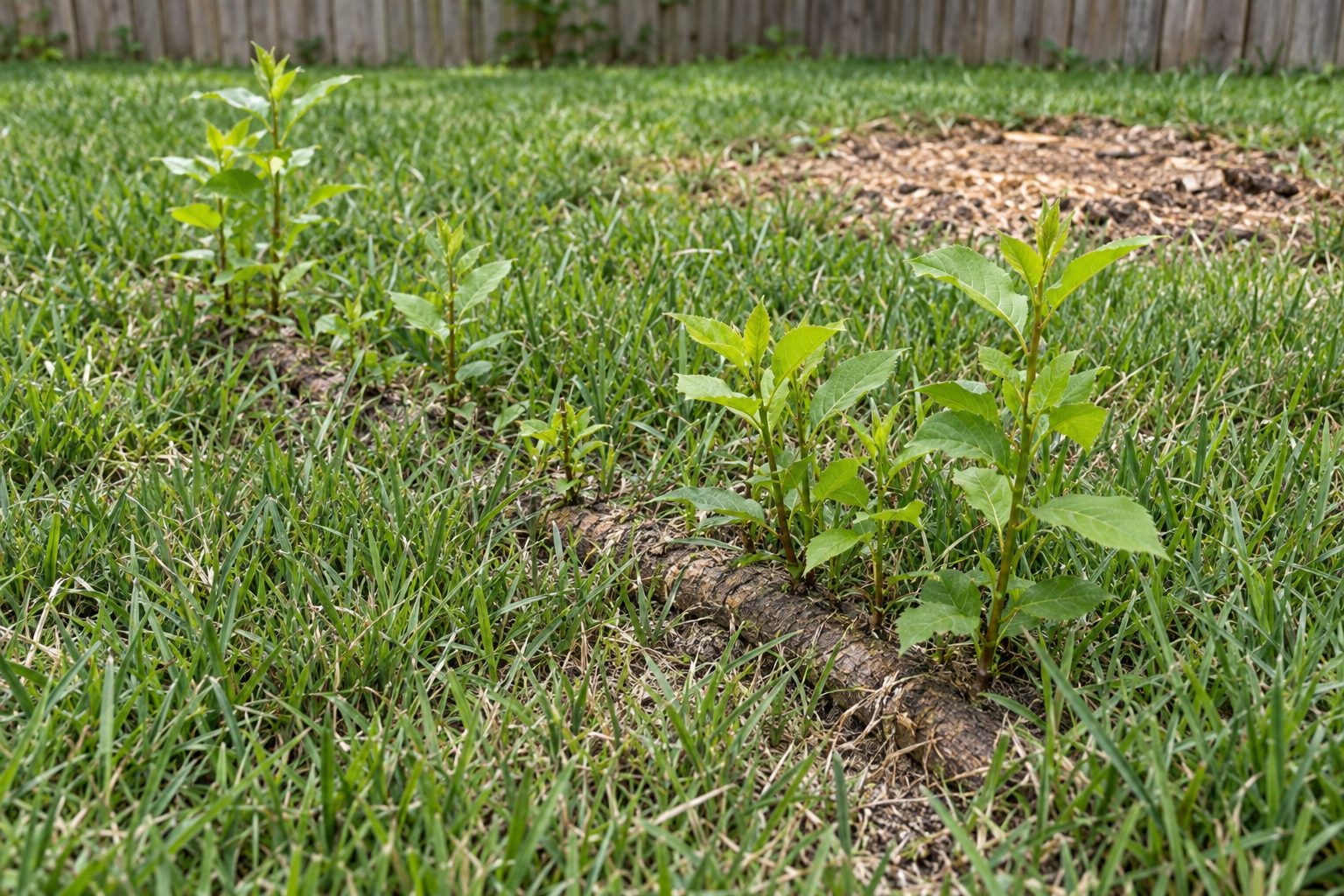
Grinding the surface roots
We chase the surface roots several feet out from the stump and grind them below grade in the same visit. An underpowered rental unit tends to leave only the visible stump face, with the roots still humped across the lawn.
Trace each major root
We follow the roots sticking up out of the lawn from the stump outward, to see where each one runs.
Grind them below grade
The cutting wheel takes each major root down under the dirt line several feet out, along with the stump.
Rake the spot level
The chips go back into the hole and the root lines, raked level so the mower clears, and we clean up when the work is done.
What a full stump grinding visit covers, start to finish:
Stump Grinding in Cape CoralRoots running across the lawn? We quote the stump and the roots together.
Request a Stump Grinding EstimateWhat the leftover roots can affect
Leftover roots can reach past the stump spot, so they can affect a neighboring tree, the paving close by and the health of the soil around them.
A neighboring tree
Through shared roots
Paving and slabs
Where roots keep growing
The soil itself
Where rot fungi travel
Can the roots harm nearby trees or paving?
Yes: roots grafted to a neighboring tree or infected with root rot can harm that tree, and roots that are still growing can crack paving.
Where the stump's roots are joined to a living tree through "root grafts", grinding through them can damage or kill the neighbor, and root rot such as Armillaria can spread through those same grafts. Cutting the surface roots of a tree you want to keep, such as a shallow-rooted maple, can make it decline or fail. Tell us about any tree you are keeping near the stump when you call.
When must the roots come out?
The roots must come out when the spot is going to be replanted or built on.
A new tree needs the room the old roots fill, and a patio, a driveway extension or a footing needs firm ground under its base. For a palm killed by Ganoderma butt rot, UF/IFAS Extension advises removing or grinding the stump and not replanting a palm in the same spot without precautions.
When the whole root ball has to come out, that is stump removal:
Stump Removal in Cape CoralFrom Google
A neighbor on how the stump job went
This review is from our Google profile, as the customer wrote it.
Very quick service. Came next day in the morning with all tools needed. Very self sufficient and cleared up our stump in no time. Pricing was great and better than competitor. Give him a call if you need stumps removed !!
Your free estimate
Stump and surface roots, ground in one visit
Call with the number of stumps and where the roots run across the yard. We quote the stump and the roots together before we start, and the spot is raked level when we leave.
Request a Stump Grinding Estimate (239) 423-0196- We quote the whole job before we start, with no surprise charges after
- We answer the phone or call back the same working day
Open every day of the week; a call outside our hours is returned the next working morning.